


Originally published in the Guelph Mercury Tribune March 4, 2019
"I’ve been waiting 15 minutes for the bus to show and two showed up at the same time.”
This phenomenon is known as “bus bunching,” It’s a problem that has been afflicting transit systems around the world for decades.
Bus bunching is very annoying for riders, especially in winter, since it increases the average time spent waiting for the bus.
Bunching also makes our system much less reliable, because it causes buses to get off their schedule. These long waits can also cause people to shift away from transit to less sustainable modes of transportation.
Bus bunching occurs because bus routes are characteristically volatile. When a bus is running on time, everything appears to work fine, travelling from bus stop to stop, waiting at each for passengers to enter or exit. However, once a bus gets behind schedule, it’s almost impossible to get it back on track. It’ll continue to get further behind schedule until the next bus behind it catches up.
Guelph Transit’s 99 Mainline runs every 10 minutes. Let’s say one person turns up at every bus stop every minute. In reality, it’s much more random than that — which is part of the problem — but we can’t blame people for not being synchronized with strangers.
The bus is running two minutes late. No big deal. There’s now a 12-minute gap from the bus in front and an 8-minute gap from the bus behind. People arrive at the stop every minute. The bus is now picking up more people than expected, while the one behind is getting fewer people.
The two are now gaining on each other. The bus stops are getting busier. The one in front is now finding two or three times as many people as expected. The gap between the two is getting smaller until they meet each other.
People will always want to get on the first bus which turns up, which means that bus will never make up for lost time.
So what can be done to stop this?
One strategy is to instruct late buses to skip stops or limit the number of people allowed to board a late bus. Of course, doing so can leave potential users stranded.
Another common strategy is to build more time than needed into a bus’s schedule. This is called slack and helps accommodate variability in bus travel time. Buses can hold at a select stop until the scheduled time to depart. However, this strategy doesn’t help late buses recover and is still susceptible to any disturbances that caused the bus to get off schedule in the first place.
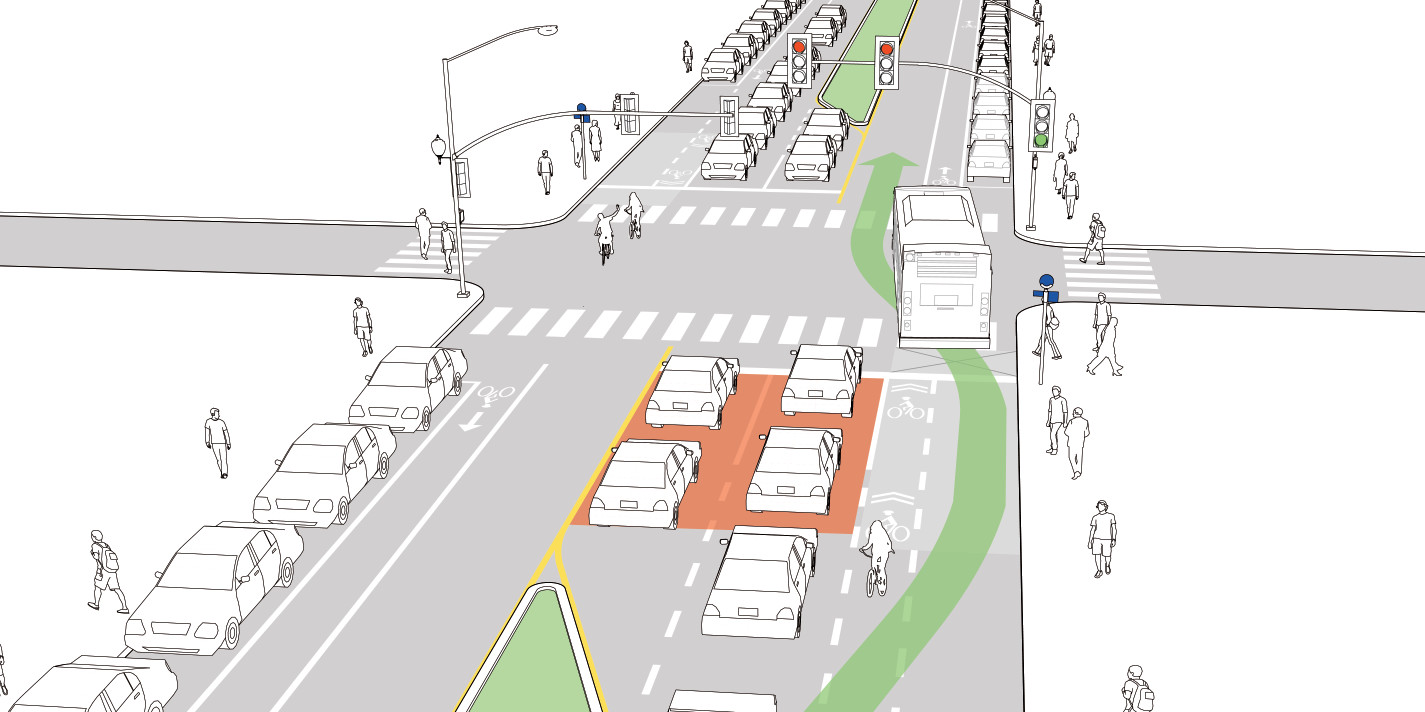
One of the best solutions is to give buses a path around congestion. Transit priority measures (TPM) are techniques that are used to reduced delays on congested roads. They can include a wide variety of treatments ranging from modification of signage and traffic signal prioritization, to the addition of queue-jumping lanes, which allow buses to move ahead of congested traffic at intersections. TPMs prioritize the movement of buses over other vehicles in the transportation network, making public transit faster, more efficient and reliable for users.
A better and faster transit service can attract more riders and be a catalyst for transit-supportive development, increasing the percentage of travel by transit in Guelph, which allows growth to occur without continued reliance on the car.
The City of Guelph will soon be updating the transportation master plan and creating a new Transit Growth Strategy. Bus users should tell city hall that giving transit a path around congestion, making transit faster and more reliable, should be a top priority.
Steven Petric is chair and co-founder of the Transit Action Alliance of Guelph (TAAG), which is a broad based, non-profit community organization advocating for frequent, affordable, and accessible transit in Guelph. They can be reached at taaguelph.com.


