


Heritage is officially "transit-able"—but only if you have the right map.
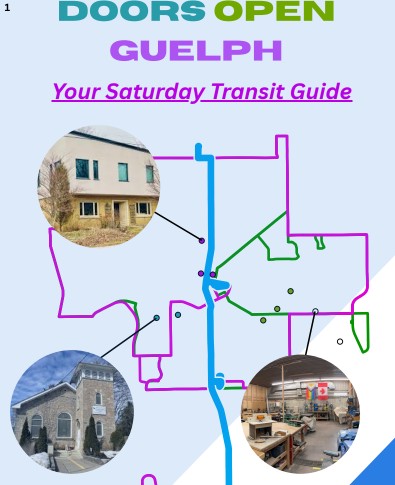
As Doors Open Guelph prepares for its exclusive six-hour window this Saturday, April 25, the Transit Action Alliance of Guelph (TAAG) has stepped in to bridge the gap between historic architecture and modern mobility. The group has released the Doors Open Guelph 2026 Transit Guide, a comprehensive navigation tool designed to help residents conquer all 11 sites without needing a car key.
However, the guide is more than just a map; it’s a stark visual reminder of the "mobility ceiling" currently facing a rapidly growing Guelph.
A Hub-and-Spoke Vision for Heritage
Navigating a city-wide event in a single afternoon can be daunting. To solve this, TAAG has reimagined Guelph’s standard route map into a user-friendly "Hub-and-Spoke" system. Centered at Guelph Central Station (GCS), the guide organizes the 11 participating sites into four strategic geographic loops:
- The Downtown Hub (Walking/99 Mainline): Features the Royal City Mission, Central Public School, and eMERGE Home 2.
- The York Road Loop (Route 4): Provides access to the Diyode Workshop and the Reformatory Side Trail.
- The East End Circuit (Route 13): Connects Fire Station 5, Slinky Swellness, and Restoration Design.
- The South Pulse (Routes 8, 16, & 99): Links the Masjid (Muslim Society), eMERGE Home 1, and the Hammond Museum of Radio.
"Frequency is Freedom"
With the event running strictly from 10:00 a.m. to 4:00 p.m., every minute matters. In a high-stakes, six-hour window, the efficiency of the network determines how much of the city's history a resident can actually consume.
“In a six-hour event, a 30-minute wait for a bus isn’t just an inconvenience; it’s a lost opportunity that keeps people in their cars," says Steven Petric, President of TAAG. "Frequency is freedom - the freedom to move through our city without a stopwatch.”
While the 99 Mainline provides frequent service, many other routes remain stuck in a decades-old Saturday schedule. TAAG’s data suggests that Guelph’s stagnant weekend service - currently holding at 30-minute frequencies - acts as a barrier to community participation.
Moving to a city-wide 15-minute "base" service would effectively save the average attendee a full hour of total travel time. That is the difference between heading home early and fitting in two additional heritage sites before the doors close at 4:00 p.m.
From Attendee to Advocate
The final page of the transit guide isn't just about directions; it’s a call to action. Help us advocate for frequent, affordable, and accessible transit by clicking here.
Ready to explore?
Download our Doors Open Guelph Saturday Transit Guide here.


